

TL;DR:
- Fluoride-free oral care relies on evidence-backed ingredients like nano-hydroxyapatite and arginine, but proper technique and product selection are crucial for effectiveness. Regulatory limitations mean these products cannot claim cavity prevention, so behavioral consistency and professional monitoring are essential. Success requires diligent brushing, ingredient verification, and ongoing assessment to support enamel health without fluoride.
Many health-conscious consumers and parents seeking fluoride-free alternatives face a specific challenge: natural toothpaste labels rarely disclose whether their active ingredients are clinically supported, leaving buyers to navigate conflicting marketing claims and limited regulatory guidance. This guide addresses that uncertainty directly, covering the scientific basis for fluoride-free brushing, how to select evidence-backed products, the correct technique, common procedural errors, and how to objectively verify whether a natural oral care routine is producing measurable results.
Table of Contents
- What you need to know before choosing fluoride-free brushing
- Tools and ingredients for safe, natural fluoride-free brushing
- How to brush fluoride-free: Step-by-step routine
- Common mistakes and advanced tips for fluoride-free success
- Measuring your success: How to know if your fluoride-free routine works
- What smart fluoride-free brushers actually do differently
- Explore evidence-based fluoride-free care options
- Frequently asked questions
Key Takeaways
| Point | Details |
|---|---|
| Technique matters most | Brushing thoroughly and consistently is the critical factor for fluoride-free success. |
| Choose actives with evidence | Opt for fluoride-free products containing proven ingredients like hydroxyapatite or calcium phosphate. |
| Diet counts | Limiting sugar intake is as important as your brushing routine for avoiding cavities naturally. |
| Professional checkups | Seeing a dentist regularly is essential, especially for children and those switching routines. |
| Delivery method varies | How ingredients are formulated and delivered (serum vs. paste) can impact their effectiveness. |
What you need to know before choosing fluoride-free brushing
The first principle in fluoride-free oral care is regulatory clarity. No fluoride-free product can receive the ADA Seal of Acceptance for cavity protection because anticaries requirements specify fluoride-containing compounds. This is not a minor regulatory technicality. It means that any toothpaste marketed as fluoride-free cannot legally claim to prevent cavities under ADA’s cavity-protection criteria, regardless of what other active ingredients it contains.
That does not mean fluoride-free brushing is ineffective. It means the clinical benchmark shifts. A practical fluoride-free approach is not “no chemistry required.” It shifts emphasis to sustained plaque removal mechanics, caries risk mitigation, and selecting fluoride-free formulations with remineralizing or antibacterial actives that have clinical or laboratory support. In practical terms, technique, diet, and ingredient selection each carry more weight in a fluoride-free regimen than in conventional brushing.
The following considerations are essential before beginning:
- Regulatory status: Fluoride-free products are not eligible for anticaries labeling under current regulatory frameworks in the United States.
- Mechanism difference: Fluoride works by incorporating into enamel crystalline structure. Non-fluoride alternatives use different mechanisms, such as biomimetic mineral deposition or biofilm disruption.
- Product labeling: Claims such as “strengthens enamel” or “fights cavities” on fluoride-free products are not regulated to the same evidentiary standard as fluoride-containing toothpastes.
- Ingredient specificity: The same broad category name, such as “calcium phosphate,” may refer to multiple distinct compounds with different levels of clinical evidence.
A remineralizing toothpaste formulated with verified actives and appropriate delivery mechanisms is the appropriate starting point for building a fluoride-free protocol.
Most cavity-prevention claims require fluoride. Know what to expect from natural products before making the switch.
Understanding these boundaries is not discouraging. Rather, it allows consumers to make accurate decisions, set realistic expectations, and select products that have genuine scientific rationale rather than marketing-driven claims.
Tools and ingredients for safe, natural fluoride-free brushing
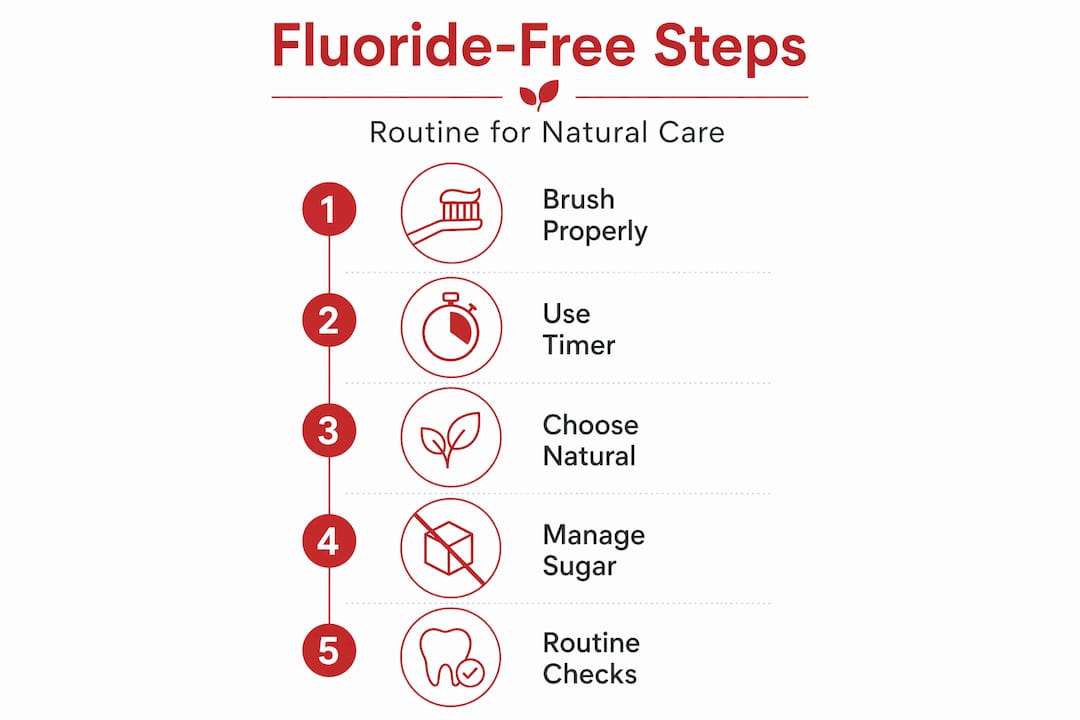
Effective fluoride-free brushing requires three core tools: a soft-bristled toothbrush, a reliable brushing timer, and a fluoride-free toothpaste containing clinically evaluated active ingredients. Each element influences outcome independently, and substituting any one with an inferior option can undermine the entire routine.
The ingredient profile of the toothpaste is the most variable element. Clinically studied fluoride-free alternatives include hydroxyapatite and arginine toothpastes, though behavioral factors remain crucial for success regardless of the chosen formula. Additionally, in vitro studies show that some fluoride-free pastes, particularly those containing nano-hydroxyapatite, can remineralize under controlled conditions, with formulation and delivery method directly affecting performance.
| Active ingredient | Mechanism | Evidence level | Notes |
|---|---|---|---|
| Nano-hydroxyapatite | Biomimetic enamel remineralization | Clinical and in vitro | Formulation and particle size critical |
| Arginine with calcium carbonate | Neutralizes acid at plaque level | Clinical | More evidence in specific populations |
| Amorphous calcium phosphate (ACP) | Releases calcium and phosphate ions | In vitro | Delivery system affects stability |
| Xylitol | Disrupts Streptococcus mutans metabolism | Clinical (adjunct) | Effective as a supplement, not standalone |
| Botanical actives (e.g., thymol, neem) | Antimicrobial and anti-inflammatory | Limited clinical | Support role; botanical actives may enhance overall efficacy |
Key product selection criteria:
- Verify the concentration: Nano-hydroxyapatite requires adequate concentration, typically 10% or above, to demonstrate measurable remineralization effects.
- Check stability: Amorphous calcium phosphate is unstable unless paired with a stabilizing agent such as casein phosphopeptide (CPP-ACP).
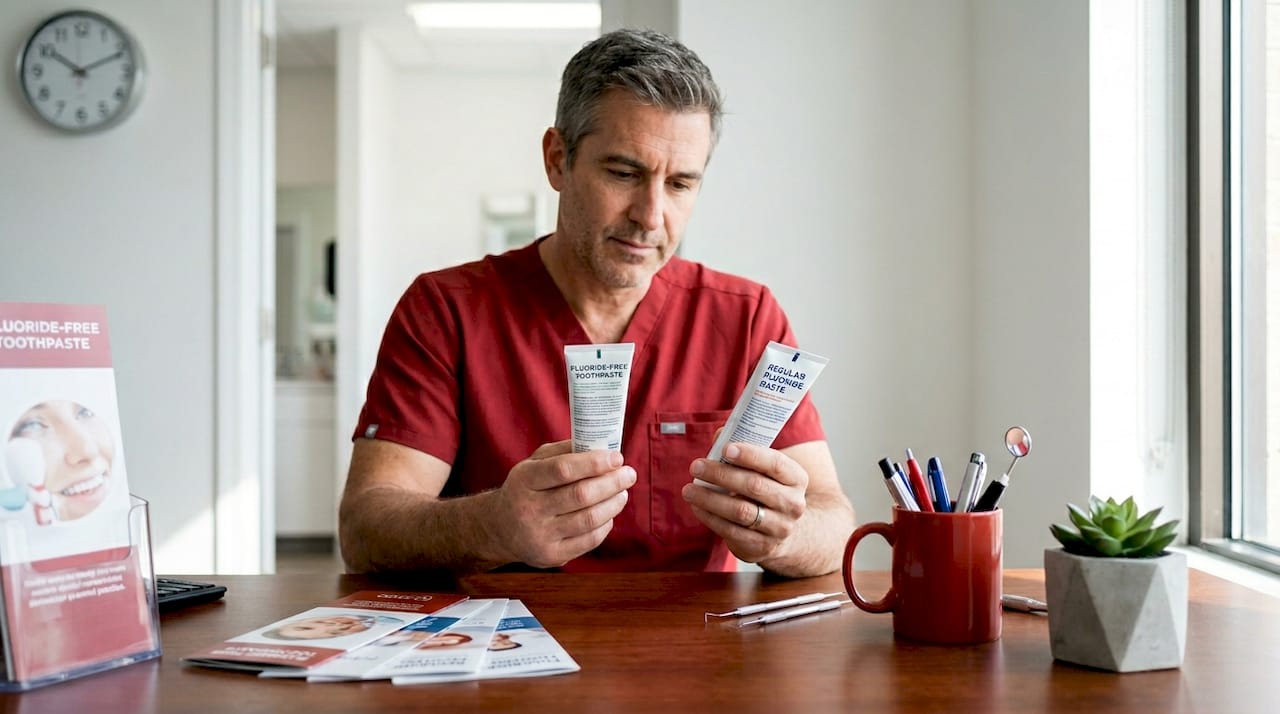
- Confirm product form: Toothpaste, gel, powder, and serum formulations deliver active ingredients differently, and performance data from one format does not automatically apply to another.
- Review the full ingredient list: Secondary ingredients such as abrasives, humectants, and surfactants affect how actives interact with enamel and biofilm.
The natural oral health benefits of a properly formulated fluoride-free product extend beyond remineralization. Products incorporating Dead Sea minerals, for example, contribute bioavailable trace elements including magnesium, potassium, and zinc, each of which has documented roles in supporting periodontal health and modulating inflammatory responses in oral tissue.
Pro Tip: When evaluating a fluoride-free toothpaste, search for the active ingredient’s clinical data specifically in the toothpaste format, since in vitro serum results may not translate directly to brushing performance.
How to brush fluoride-free: Step-by-step routine
Correct brushing mechanics are the single most controllable variable in a fluoride-free oral care regimen. Caries prevention with fluoride-free toothpaste relies strongly on behavioral factors, including brushing technique, duration, and sugar reduction, which means that an incorrect technique will not be compensated by ingredient quality alone.
Follow this structured routine for optimal results:
- Rinse the brush: Wet the bristles briefly under cool water to soften them before application.
- Apply a pea-sized amount: Dispense approximately 1 to 1.5 grams of toothpaste onto the brush. For children under three, use a rice-grain amount if using fluoride-free formulations.
- Position the brush at 45 degrees: Angle the bristles toward the gumline at a 45-degree angle to the tooth surface to engage the gingival margin effectively.
- Use short, circular strokes: Apply gentle circular or modified Bass strokes across two to three teeth at a time. Avoid horizontal scrubbing, which increases enamel abrasion and gum recession risk.
- Cover all surfaces systematically: Brush outer surfaces, then inner surfaces, then occlusal (chewing) surfaces. Address each quadrant individually to maintain consistency.
- Brush for two full minutes: Total brushing duration should be no less than 120 seconds. Divide time into four 30-second quadrants.
- Do not rinse immediately: After brushing, spit out excess toothpaste but do not rinse with water for at least 30 seconds. This allows residual actives contact time with the enamel surface.
- Follow with interdental cleaning: Use floss, interdental brushes, or a water flosser to address approximal surfaces that the toothbrush cannot reach.
- Finish with a fluoride-free mouth rinse if indicated: A fluoride-free dental hygiene step can include a compatible mineral rinse to extend protective contact time.
Technique and consistency matter as much as ingredients for cavity prevention in any fluoride-free protocol.
Managing dietary sugar exposure throughout the day is equally important. Each sugar exposure event lowers oral pH below 5.5, creating a window for demineralization. Reducing snacking frequency and rinsing with water after carbohydrate intake can meaningfully reduce cumulative acid challenge.
Pro Tip: Set a brushing timer or use a dedicated brushing app for consistent two-minute sessions. Visual feedback significantly improves brushing duration compliance in both adults and children, and a fluoride-free dental care workflow built around this habit produces more consistent results.
Common mistakes and advanced tips for fluoride-free success
Even well-intentioned fluoride-free routines frequently fail due to a predictable set of procedural and product selection errors. Identifying and correcting these mistakes early prevents compounding issues over time.
Common procedural and selection mistakes include:
- Underbrushing: Brushing for less than two minutes or skipping interdental cleaning leaves supragingival and approximal biofilm intact, negating the antibacterial and remineralizing benefits of active ingredients.
- Choosing products without ingredient evidence: A label that reads “natural minerals” or “plant extracts” without specifying the compound, concentration, or supporting data is not sufficient for informed selection. The same general claim can describe products with dramatically different efficacy profiles.
- Overestimating diet’s permissiveness: Some users assume that a high-quality fluoride-free toothpaste will offset frequent sugar exposure. The remineralization capacity of even the best non-fluoride actives is insufficient to neutralize high-frequency acid attack without dietary modification.
- Ignoring delivery method differences: Mineral delivery may vary by formulation and application method, and the same ingredient may perform differently as a toothpaste versus a serum. Using a powder format, for example, may alter both abrasivity and active concentration at the tooth surface.
- Discontinuing use before results are measurable: Remineralization processes occur over weeks to months, not days. Switching products frequently prevents objective assessment of any single formula.
- Neglecting fluoride-free care mistakes such as using an abrasive brush with a low-RDA (Relative Dentin Abrasivity) formula, which can compromise the protective effect of mineral coatings.
Pro Tip: Before purchasing, search for the specific toothpaste brand’s published formula or peer-reviewed citation. Responsible manufacturers reference their clinical data by formulation, not merely ingredient category. Broad ingredient names without concentration data or delivery context are inadequate for professional evaluation.
Advanced optimization strategies include pairing the toothpaste routine with oil pulling using sesame or coconut oil, which has demonstrated modest reductions in salivary Streptococcus mutans counts in clinical investigations. Probiotic lozenges containing Lactobacillus reuteri have also shown preliminary evidence for reducing cariogenic biofilm, though these represent adjunct strategies rather than replacements for the core mechanical routine.
Measuring your success: How to know if your fluoride-free routine works
Objective outcome monitoring is a necessary component of any fluoride-free protocol. Without systematic self-assessment and professional oversight, it is not possible to distinguish effective maintenance from gradual deterioration.
Primary self-monitoring indicators include:
- Plaque accumulation: Using disclosing tablets once weekly provides a reliable visual indicator of brushing coverage. Consistent staining in the same areas identifies technique gaps.
- Gingival health: Healthy gums are pale pink, firm, and do not bleed during brushing or flossing. Persistent bleeding, recession, or inflammation warrants professional evaluation.
- Sensitivity changes: Increased thermal sensitivity may indicate enamel loss and should be assessed professionally, particularly in individuals with high caries risk.
- Surface texture: Smooth enamel surfaces on anterior teeth can be evaluated tactilely. Increasing roughness or visible white spot lesions (early caries indicators) require immediate professional intervention.
For parents selecting fluoride-free care for children, the clinical threshold for vigilance is substantially higher. Major organizations do not endorse fluoride-free toothpaste as a default replacement for children, and extra attention to risk management and professional guidance is essential. A pediatric dentist should be consulted before initiating a fluoride-free protocol for children in higher caries risk categories.
| Outcome metric | Fluoride routine (expected) | Fluoride-free routine (expected) |
|---|---|---|
| Cavity prevention efficacy | High; strongly supported by evidence | Moderate; depends on formulation and behavior |
| Remineralization capacity | High; systemic evidence | Moderate to high; product and technique dependent |
| Gum health support | Moderate; technique-dependent | Moderate; enhanced with anti-inflammatory botanicals |
| Safety for young children | Requires age-appropriate dosing | Requires professional guidance on suitability |
| Regulatory approval (anticaries) | ADA Seal available | Not eligible for ADA anticaries Seal |
Professional dental checkups scheduled every six months provide the definitive benchmark for caries incidence and enamel integrity. Sharing your fluoride-free preference explicitly with your dentist allows for calibrated risk assessment and early identification of any concerns. Reviewing early caries symptoms equips you to recognize initial signs before they progress to cavities requiring restoration.
For families seeking structured guidance, a comprehensive oral care checklist for families can organize monitoring tasks and ensure no component of the preventive routine is overlooked. Reviewing guidance on choosing fluoride-free toothpaste ensures product selection criteria remain aligned with current evidence as formulations evolve.
What smart fluoride-free brushers actually do differently
The most common reason fluoride-free routines underperform is not ingredient inadequacy. It is the assumption that a product change is sufficient to replace the protective function previously provided by fluoride. Experienced practitioners and informed consumers who succeed with fluoride-free protocols consistently share a different operating principle: the product supports the behavior, not the reverse.
The ADA frames cavity-prevention anticaries claims under the Seal of Acceptance as requiring fluoride, which establishes the evidence gap that fluoride-free users must compensate for through behavioral precision. Those who succeed do so by treating brushing as a clinical procedure rather than a habitual task.
Choosing fluoride-free means adding diligence, not skipping steps. The protective margin provided by fluoride must be replaced by behavioral consistency and evidence-backed product selection.
Successful fluoride-free users also maintain active feedback loops with dental professionals. Rather than avoiding the dentist out of concern that a fluoride-based recommendation will follow, they use professional checkups as data collection opportunities and adjust their approach accordingly. This feedback-driven approach is the most reliable safeguard against subclinical deterioration.
Incorporating remineralizing mouthwash benefits into the evening routine extends mineral contact time beyond what brushing alone provides, particularly for individuals with dry mouth, high sugar intake history, or prior caries experience.
Pro Tip: Periodically photograph your teeth and gingival margins under consistent lighting conditions every 60 days. Visual comparison over time provides a low-cost, accessible record of tissue changes that can supplement professional assessments and inform product adjustments.
The behavioral discipline required for successful fluoride-free brushing is not excessive. It is, however, non-negotiable. Mindful, consistent plaque removal, reduced sugar frequency, verified active ingredients, and regular professional oversight constitute the complete protocol.
Explore evidence-based fluoride-free care options
Stop Oral Care formulates its fluoride-free product line around clinically referenced actives, including nano-hydroxyapatite, calcium phosphates, botanical extracts, and Dead Sea minerals, addressing the primary gaps in typical natural toothpaste formulations. Each product in the range is developed under the guidance of Dr. Veronica Stahl, whose background in both dentistry and natural medicine informs the evidence-based approach to ingredient selection and delivery.
For health-conscious families ready to implement or refine a fluoride-free routine, Stop Oral Care provides both the products and the scientific context needed to make informed decisions. Browse the full product range, review ingredient documentation, and access ongoing educational resources designed to support every stage of your natural oral care protocol.
Frequently asked questions
Is fluoride-free toothpaste as effective as fluoride toothpaste?
Clinical evidence demonstrates that fluoride toothpastes carry stronger anticaries credentials; however, select fluoride-free formulations show laboratory and clinical promise when paired with proper technique and dietary management.
Can children use fluoride-free toothpaste safely?
Major dental organizations recommend fluoride toothpaste for most children as the standard of care; fluoride-free alternatives for children should only be considered under professional guidance accounting for individual caries risk and water fluoride status.
What natural ingredients actually help protect teeth without fluoride?
Nano-hydroxyapatite and arginine-based pastes have demonstrated the strongest clinical evidence among fluoride-free alternatives, while in vitro data supports amorphous calcium phosphate and nano-hydroxyapatite for enamel remineralization under controlled conditions.
How do I know if a fluoride-free routine is working?
Monitor for reduced plaque accumulation, non-bleeding gums, no new cavities at professional checkups, and stable enamel surface texture; regular professional assessment remains essential for objective verification.
Are all fluoride-free toothpastes basically the same?
No; mineral delivery varies significantly by formulation and application method, meaning two products listing the same active ingredient, such as nano-hydroxyapatite, may produce substantially different clinical results depending on particle size, concentration, and delivery format.