

TL;DR:
- Conventional oral care products significantly contribute to plastic pollution and microplastic contamination.
- Zero-waste, fluoride-free alternatives are effective and environmentally sustainable with proper transition strategies.
- Behavioral habits and gradual product adoption are key to maintaining long-term sustainable oral hygiene routines.
The assumption that a daily dental hygiene routine is environmentally neutral has proven to be scientifically indefensible. Over 850 million toothbrushes are discarded annually in the United States alone, while 1.5 billion toothpaste tubes enter the global waste stream each year, the vast majority of which are non-recyclable and contribute directly to landfill accumulation and ocean contamination. This article examines the documented environmental burden of conventional oral care, evaluates the scientific evidence supporting zero-waste and fluoride-free alternatives, and outlines practical, evidence-based strategies for transitioning to an ecologically responsible oral hygiene routine.
Table of Contents
- How oral care contributes to global plastic pollution
- What makes zero-waste oral care different?
- Do zero-waste fluoride-free alternatives work?
- Global health perspectives: Environmentally responsible dental care
- The overlooked truth: What actually drives zero-waste oral care adoption
- Explore zero-waste oral care options
- Frequently asked questions
Key Takeaways
| Point | Details |
|---|---|
| Plastic waste is massive | Traditional oral care creates billions of waste items each year, threatening the environment. |
| Microplastics are a health concern | Cheap toothbrushes can release microplastics with unknown long-term effects on oral and overall health. |
| Zero-waste solutions work | Evidence shows that fluoride-free, zero-waste toothpaste options can prevent cavities as well as fluoride. |
| WHO endorses sustainability | The World Health Organization supports a shift toward eco-friendly, less harmful dental care globally. |
| Small habits add up | Even one household switching to zero-waste oral care can contribute to significant change over time. |
How oral care contributes to global plastic pollution
The environmental consequences of conventional oral care are both measurable and significant. Standard toothbrushes are manufactured from nylon bristles embedded in polypropylene or polyethylene handles, neither of which degrades under normal environmental conditions. The result, according to documented plastic waste generation data, is a continuous and growing accumulation of oral care refuse that enters landfills, waterways, and marine ecosystems.
“At the current disposal rate of 2.5 toothbrushes per second in the United States, the volume of oral care plastic waste entering the environment represents one of the most pervasive and overlooked sources of single-use plastic pollution in the personal care sector.”
The contamination problem extends beyond visible plastic debris. Research published in peer-reviewed microbiology literature demonstrates that toothbrushes release microplastic particles during routine use, with low-cost brush brands averaging approximately 39 microplastic particles released per day. These particles have been associated with oral inflammation, alterations in the subgingival biofilm, elevated periodontitis risk, and potential systemic health implications through ingestion and mucosal absorption. The clinical significance of chronic low-level microplastic exposure in the oral cavity is an active and expanding area of research.
Key sources of oral care plastic waste include:
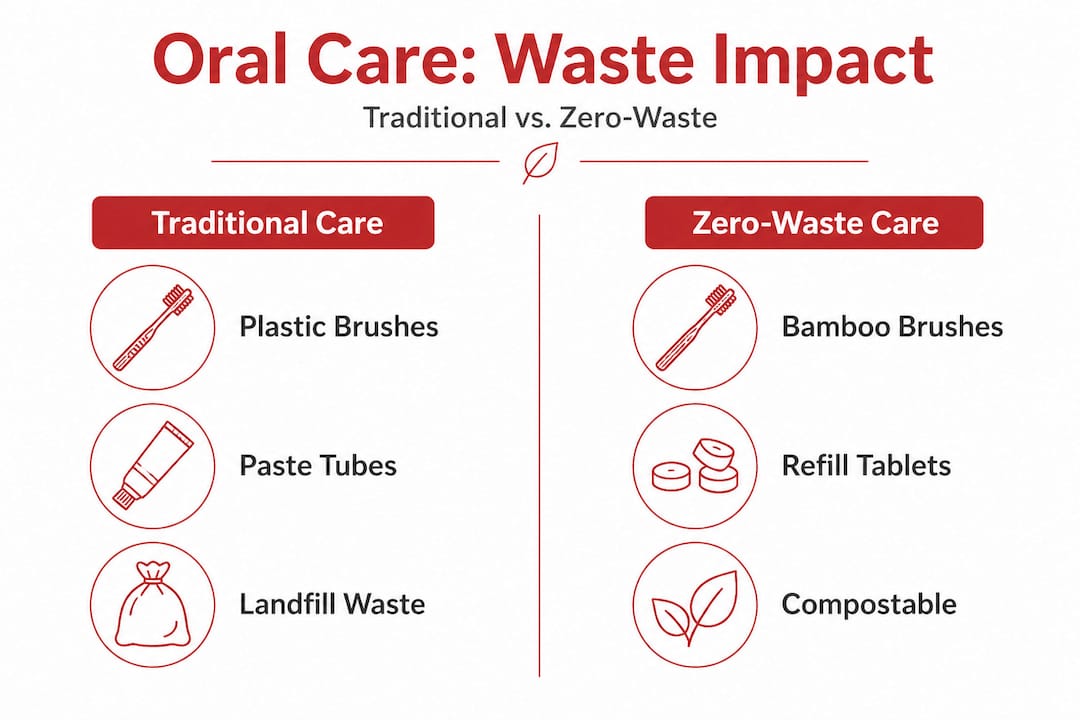
- Toothbrushes: Nylon and polypropylene composite, non-recyclable in standard municipal systems
- Toothpaste tubes: Multi-layer laminate construction that prevents separation of materials for recycling
- Floss packaging: Small plastic containers typically excluded from curbside recycling programs
- Mouthwash bottles: High-density polyethylene (HDPE) bottles, recyclable in some regions but frequently landfilled
- Travel-size packaging: Disproportionately wasteful relative to product volume
The benefits of sustainable oral care have been increasingly documented in both environmental science and public health literature. The table below summarizes the primary waste contributors and their approximate annual global volumes.
| Product | Estimated Annual Global Waste | Recyclability | Primary Material |
|---|---|---|---|
| Toothbrushes | 4.7 billion units | Non-recyclable | Nylon, polypropylene |
| Toothpaste tubes | 1.5 billion units | Non-recyclable | Multi-layer laminate |
| Floss containers | 2 billion units | Rarely recycled | Polystyrene, HDPE |
| Mouthwash bottles | 900 million units | Partially recyclable | HDPE |
Adopting eco-friendly dental practices represents a measurable intervention against these documented waste streams, particularly when transitions are made at the household and institutional levels simultaneously.
What makes zero-waste oral care different?
Zero-waste oral care is defined by a product design philosophy that prioritizes the elimination of non-recyclable packaging, extends the functional lifespan of individual product components, and incorporates materials that are either compostable, refillable, or manufactured from sustainably sourced inputs. This approach differs fundamentally from conventional oral care in both engineering and intent.
Life cycle analysis (LCA) data provides one of the most objective frameworks for evaluating these differences. A peer-reviewed LCA study of modular toothbrushes demonstrated that replaceable-head brush designs produce statistically significant reductions in plastic material use, total waste volume, and cumulative energy demand when compared against full-handle replacement cycles typical of disposable brushes. Consumer adoption of these modular systems remains constrained primarily by limited awareness rather than by product performance or cost barriers.
The product landscape within oral care sustainability has expanded considerably in recent years. The following table provides a structured comparison of conventional and zero-waste alternatives across major oral care categories.
| Product Category | Conventional Option | Zero-Waste Alternative | Key Environmental Benefit |
|---|---|---|---|
| Toothbrush | Disposable plastic brush | Bamboo handle or modular replaceable-head | Compostable or reduced plastic |
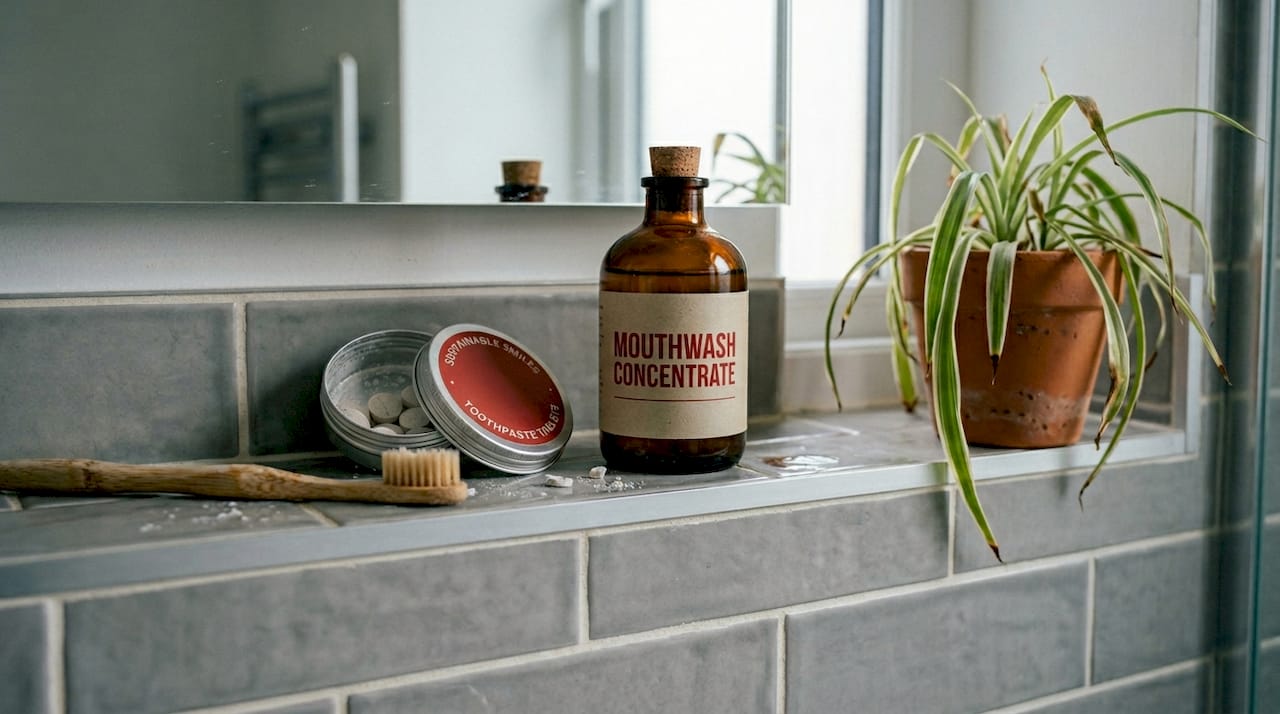
| Toothpaste | Multi-layer laminate tube | Pressed toothpaste tablets in glass jar | Eliminates non-recyclable tube |
| Dental floss | Nylon floss in plastic case | Silk or plant-fiber floss in refillable container | Biodegradable material |
| Mouthwash | Single-use plastic bottle | Concentrated tablets or refillable glass bottle | Reduced packaging waste |
| Tongue cleaner | Disposable plastic scraper | Stainless steel reusable cleaner | Indefinite functional lifespan |
Pro Tip: When evaluating zero-waste oral care products, prioritize those carrying third-party certifications such as B Corp, Leaping Bunny, or certifications from recognized composting standards bodies. These credentials reduce the risk of purchasing products that carry eco-friendly marketing claims without substantive environmental validation, a practice commonly referred to as greenwashing.
The most scientifically credible zero-waste alternatives share several defining characteristics. They are manufactured without synthetic polymers in product-contact surfaces, packaged in single-material containers that qualify for standard recycling streams, and formulated without synthetic binding agents or microplastic additives that could contribute to the oral microplastic burden identified in published research.
Do zero-waste fluoride-free alternatives work?
The efficacy of fluoride-free oral care formulations represents one of the most frequently cited concerns among clinically oriented health consumers. The question of whether fluoride-free, zero-waste products can deliver equivalent protection against dental caries is now addressable through published randomized controlled trial data.
A peer-reviewed 18-month randomized controlled trial evaluating nano-hydroxyapatite toothpaste tablets against standard fluoride toothpaste in adult populations demonstrated non-inferior caries prevention outcomes across the study cohort. Nano-hydroxyapatite (nano-HA), a biomimetic analog of the calcium phosphate mineral comprising approximately 97% of dental enamel, operates through a distinct mechanism from fluoride: it physically remineralizes enamel by integrating directly into demineralized crystalline structures rather than catalyzing the formation of fluorapatite. A detailed examination of hydroxyapatite vs fluoride comparisons confirms that the remineralization pathways differ meaningfully, with nano-HA presenting a favorable safety profile particularly relevant to pediatric and fluoride-sensitive populations.
It is important to note that current dental consensus continues to identify fluoride as the gold-standard caries-preventive agent for high-caries-risk individuals and populations with limited access to preventive care. However, the growing body of evidence supports the clinical adequacy of nano-HA formulations for the majority of adult patients presenting with moderate caries risk profiles. Detailed analysis of fluoride-free toothpaste effectiveness reinforces this nuanced clinical picture.
Transitioning to fluoride-free, zero-waste oral care requires a structured approach to ensure continuity of oral health outcomes. The following steps outline a clinically informed transition protocol:
- Consult your dental provider to establish a current caries risk assessment before discontinuing fluoride-containing products.
- Select a nano-HA toothpaste tablet or powder formulated with clinically studied concentrations of nano-hydroxyapatite (typically 10% w/w).
- Allow a two-to-four-week adaptation period during which texture and foaming differences from tablet formulations become normalized through habitual use.
- Maintain twice-daily brushing frequency and a minimum of two-minute brushing duration throughout the transition period.
- Supplement with interdental cleaning using compostable floss or a water flosser to preserve complete plaque removal efficacy.
- Schedule a six-month follow-up dental examination to confirm that caries activity has not changed adversely following the product transition.
Pro Tip: When selecting a zero-waste fluoride-free product, read the ingredient list critically rather than relying on label claims such as “natural” or “plant-based.” Look for published clinical data on the specific nano-HA concentration used, and consult guidance on choosing fluoride-free toothpaste to identify formulations with a verifiable evidence base. Products incorporating botanicals in fluoride-free toothpaste such as hemp-derived compounds and mineral-rich extracts may offer additional antimicrobial and anti-inflammatory activity supported by separate lines of research.
Global health perspectives: Environmentally responsible dental care
International health policy has increasingly aligned with the evidence base supporting ecologically responsible oral care practices. The World Health Organization, in a formal position statement issued in 2026, explicitly called for a global transition toward environmentally sustainable oral care methods, with particular emphasis on the elimination of dental amalgam containing mercury, the adoption of less invasive treatment modalities, and the reduction of material waste generated across the oral care product lifecycle.
“WHO advocates a global shift to environmentally friendly oral health care that is less invasive, affordable, and effective, reflecting a commitment to reducing the environmental footprint of dental and personal oral hygiene practices without compromising clinical outcomes.”
The organization’s recommendations intersect directly with the zero-waste oral care movement across several core pillars:
- Environmental sustainability: Reduction of mercury, plastic, and non-biodegradable waste from both clinical dentistry and consumer oral care products
- Clinical efficacy: Maintenance of proven oral disease prevention and treatment outcomes through alternative formulations and materials
- Accessibility and equity: Development of affordable zero-waste alternatives that do not require financial barriers to entry for diverse global populations
- Preventive orientation: Prioritization of minimally invasive, biocompatible approaches over reactive, material-intensive dental interventions
The alignment between WHO policy and zero-waste product design is not coincidental. Institutional support from major global health bodies lends regulatory and reputational credibility to manufacturers operating within the safe oral care strategies framework, while simultaneously creating market incentives for innovation in compostable, refillable, and non-toxic product categories. Workplace dental wellness programs have also begun integrating sustainable oral care education into employee benefit frameworks, further broadening the institutional reach of this shift.
The overlooked truth: What actually drives zero-waste oral care adoption
Most analyses of zero-waste oral care adoption focus on product availability, price parity, and formulation efficacy. These factors are relevant but collectively insufficient to explain why a significant proportion of health-conscious consumers who intend to transition to sustainable oral care fail to sustain those transitions beyond the first product cycle.
The primary barrier, informed by behavioral science and consumer habit research, is not product quality. It is habit discontinuity. Standard toothpaste dispensed from a tube requires no cognitive engagement. Toothpaste tablets, by contrast, require the user to chew a solid tablet before brushing, a procedural change that disrupts a deeply entrenched motor routine. Similarly, refillable floss containers require proactive restocking, bamboo toothbrushes must be actively sourced from specialty retailers or online platforms, and nano-HA powder formulations produce a different foaming and texture profile than conventional sodium lauryl sulfate-based pastes.
These differences are not deficiencies. They are design features of products optimized for ecological performance rather than sensory familiarity. The clinical evidence confirms that their oral health outcomes are equivalent or favorable. However, the initial adaptation period generates sufficient friction to cause reversion to conventional products in a significant portion of first-time adopters.
The practical implication is that successful zero-waste oral care adoption is more accurately described as a behavioral intervention than a product substitution. Households that introduce one new sustainable product per month, rather than replacing their entire oral care inventory simultaneously, demonstrate markedly higher long-term adherence. Family-level adoption compounds individual impact, and social modeling within household units accelerates habit normalization for all members.
A carefully designed checklist for choosing safe toothpaste can serve as an effective decision-support tool during this transition, allowing health-conscious individuals to evaluate products systematically rather than reactively. The consumers who sustain zero-waste oral care routines are, almost without exception, those who combine evidence-based product selection with deliberate, incremental habit modification over a period of four to twelve weeks.
Explore zero-waste oral care options
The scientific literature reviewed in this article confirms that zero-waste, fluoride-free oral care is not an aspirational lifestyle category. It is a clinically supported, environmentally documented, and institutionally validated approach to oral hygiene that is accessible to most adults willing to engage in a structured transition process.
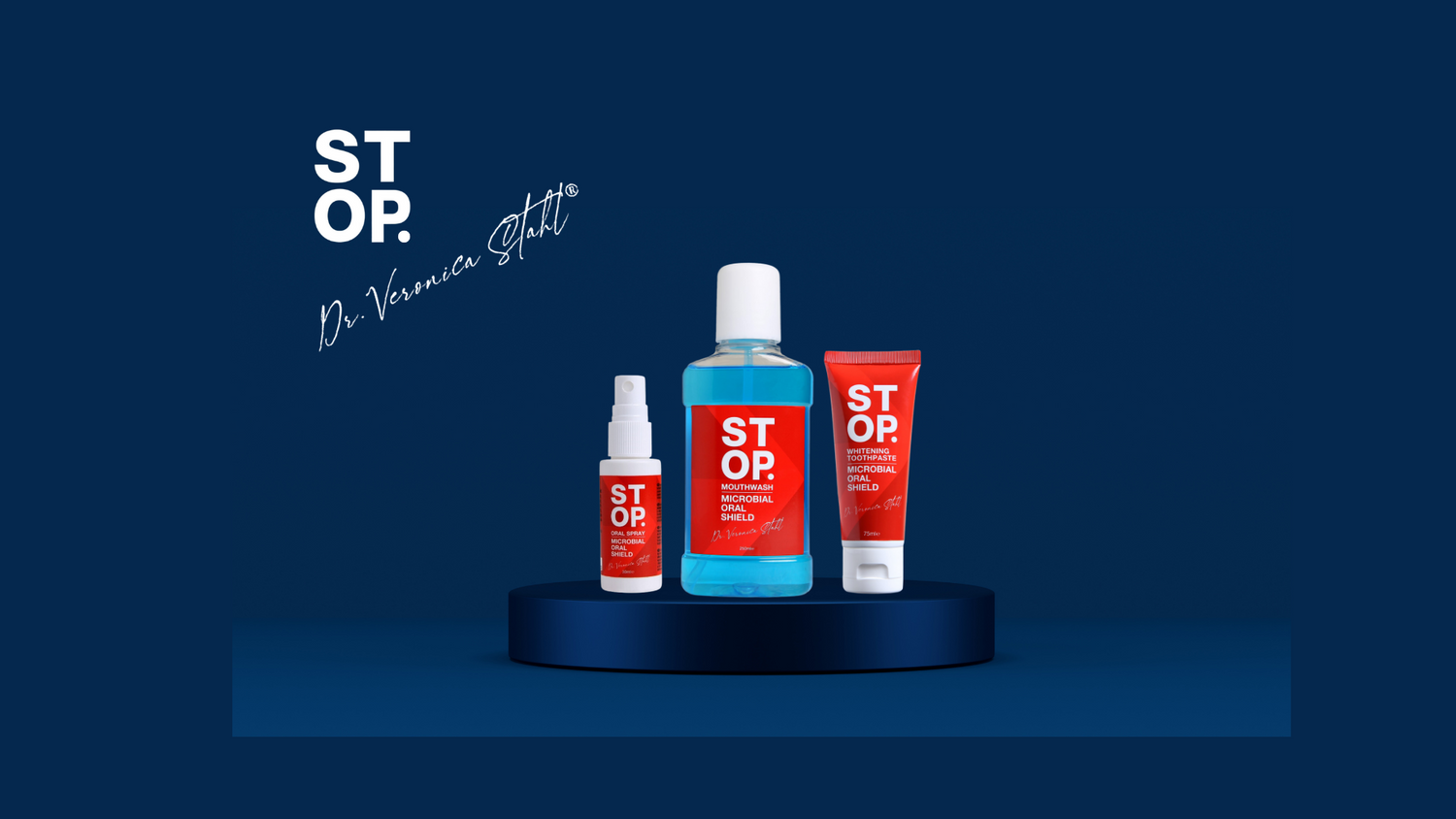
At Stop Oral Care, the product range developed under the scientific leadership of Dr. Veronica Stahl integrates clinically researched formulations combining hemp-derived compounds and Dead Sea minerals with an explicit commitment to natural, fluoride-free ingredients. Each product is designed to meet the standard of evidence-based efficacy while eliminating the environmental liabilities inherent in conventional oral care product design. For those ready to move from theoretical interest to daily practice, browsing the current product offerings represents a concrete and immediate next step toward a more ecologically responsible oral care routine.
Frequently asked questions
What is zero-waste oral care?
Zero-waste oral care encompasses product formulations and routines engineered to minimize non-recyclable waste through compostable, refillable, or reusable materials, as documented across consumer oral care waste analyses.
Are fluoride-free zero-waste toothpastes effective?
Clinical trial data confirms that nano-hydroxyapatite toothpaste tablets demonstrate non-inferior caries prevention compared to standard fluoride toothpaste in adult populations over an 18-month study period.
What are the health risks of microplastics from oral care products?
Research shows that toothbrushes release microplastic particles averaging approximately 39 particles per day from certain brush brands, with preliminary associations to gingival inflammation and oral biofilm disruption, though long-term systemic effects remain under active investigation.
Does switching to zero-waste oral care really make a difference?
Life cycle analysis confirms that modular replaceable-head toothbrushes produce measurable reductions in plastic mass, cumulative waste volume, and energy consumption compared to conventional full-handle disposal cycles, validating the environmental impact of individual product switches.
How do I start a zero-waste oral care routine?
Introduce one evidence-based sustainable swap at a time, beginning with either a compostable toothbrush or toothpaste tablets formulated with nano-hydroxyapatite, and allow a four-week adaptation window before evaluating efficacy and comfort.
Recommended
- Oral care sustainability explained: Natural alternatives & science – Stop Oral Care
- Plant-based oral hygiene: Natural alternatives for healthier teeth – Stop Oral Care
- Sustainable dental care: eco-friendly practices explained – Stop Oral Care
- Eco-Friendly Oral Hygiene: Transforming Dental Routines – Stop Oral Care
- Pouch disposal: safe, simple and eco-friendly steps – HitSnus