

TL;DR:
- Effective oral health depends on professional assessment and monitoring, not solely on product ingredients.
- Natural or fluoride-free products require expert guidance to ensure they meet individual risk profiles and prevent disease progression.
Many health-conscious consumers operate under a well-intentioned but incomplete assumption: that choosing natural or fluoride-free products is, by itself, sufficient for optimal oral health. Clinical evidence and expert consensus indicate otherwise. The actual determinant of safe, effective oral care is not simply the ingredient list on a product label, but rather the professional framework within which those products are selected and monitored. This article examines the evidence behind expert-led oral care, clarifies the scientific standing of fluoride alternatives, and provides a structured approach for consumers seeking to integrate natural options into a clinically sound oral hygiene routine.
Table of Contents
- What is expert-led oral care and why does it matter?
- The debate: Fluoride, nano-hydroxyapatite, and natural ingredients in expert oral care
- How professionals personalize fluoride-free oral care
- Practical steps: Building a safer, expert-informed natural oral care routine
- Why ‘natural’ isn’t enough: The uncomfortable truth about expert-led oral care
- Discover fluoride-free oral care guided by experts
- Frequently asked questions
Key Takeaways
| Point | Details |
|---|---|
| Expert guidance matters | Professional input and evidence-based practices are critical for safe, effective oral care routines. |
| Fluoride vs. alternatives | Fluoride remains the most proven cavity-prevention agent, while alternatives like nano-hydroxyapatite require tailored expert recommendations. |
| Personalization is key | Expert-led oral care adapts routines to individual risk profiles and monitors long-term results. |
| Natural is not always safer | Choosing natural or fluoride-free products demands clinical insight to avoid hidden oral health risks. |
What is expert-led oral care and why does it matter?
Expert-led oral care refers to a preventive and therapeutic oral health strategy that incorporates professional assessment, evidence-based product selection, and ongoing monitoring by a qualified dental practitioner. It is not limited to fluoride-containing regimens. Rather, expert oversight is equally relevant, and arguably more critical, when patients select fluoride-free alternatives.
A 2025 systematic review of clinical practice guidelines confirms that expert-led oral care is emphasized as key to maintaining oral health and effective prevention across multiple clinical settings. The review underscores that preventive outcomes depend on professional guidance rather than on any single product category.
“Preventive dentistry is not a product category. It is a professional process that must be individualized, monitored, and adjusted over time.” This distinction is central to understanding why self-directed, product-only approaches frequently fall short of clinical goals.
The foundational elements of expert-led oral care include the following:
- Comprehensive oral health assessment, including caries risk stratification, periodontal evaluation, and soft tissue examination
- Personalized product and technique recommendations grounded in the patient’s risk profile and medical history
- Structured preventive protocols covering brushing frequency, interdental cleaning methods, and dietary considerations
- Periodic clinical monitoring to identify early signs of caries, erosion, or periodontal deterioration
- Patient education that addresses the scientific rationale behind each recommendation, not merely product instructions
Understanding the natural oral health benefits of fluoride-free care requires this professional context. Without it, consumers may unknowingly select products that are inadequate for their specific risk level, leaving subclinical conditions undetected until they require more invasive intervention.
Consumer-driven demand for natural ingredients has produced a rapidly expanding market of fluoride-free formulations. Many of these products contain clinically relevant actives such as hydroxyapatite, xylitol, or botanical extracts. However, the clinical appropriateness of any given product cannot be determined by ingredient lists alone. Professional oversight bridges this gap by applying population-level evidence to individual circumstances.
The debate: Fluoride, nano-hydroxyapatite, and natural ingredients in expert oral care
The scientific conversation surrounding fluoride and its alternatives has intensified considerably over the past decade, particularly as nano-hydroxyapatite and plant-derived actives have entered the mainstream oral care market. A balanced evaluation of these options requires examining the evidence without defaulting to either conventional assumptions or marketing claims.
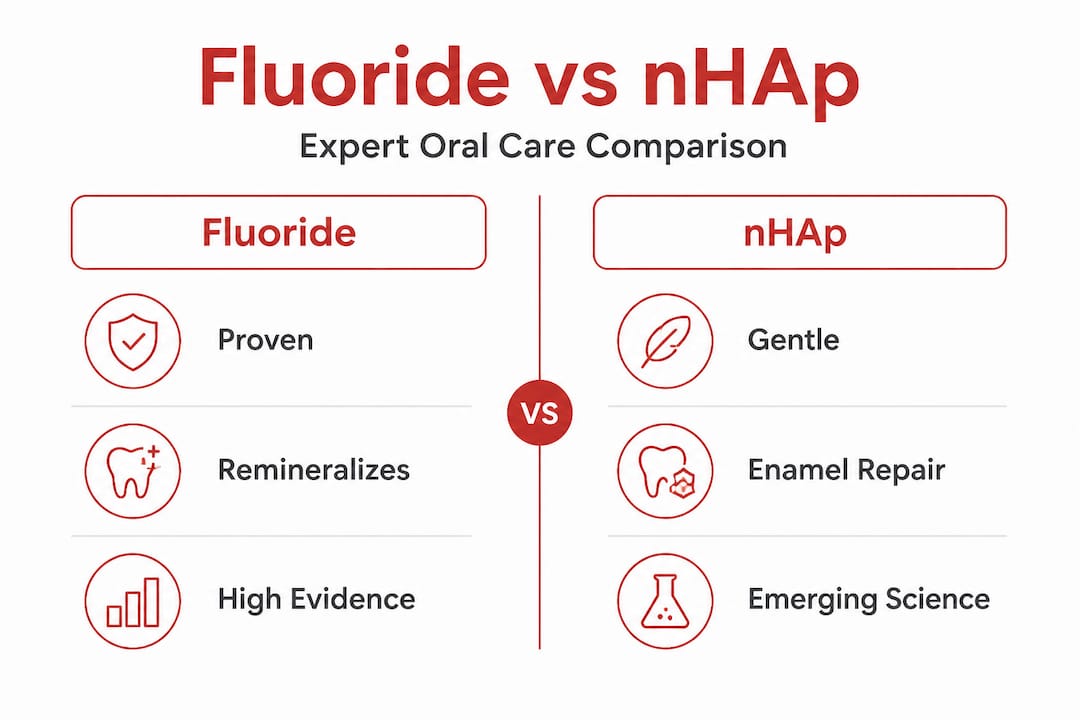
Fluoride remains the most extensively studied caries-preventive agent in modern dentistry. The ORCA position statement maintains a strong stance on the public health value of fluoride, citing its well-established mechanism of remineralizing early enamel lesions, inhibiting bacterial acid production, and reducing demineralization rates in high-risk populations. These properties are supported by decades of randomized controlled trials, systematic reviews, and population-based surveillance data.
Nano-hydroxyapatite (nHAp) is a synthetic analog of the mineral structure found in tooth enamel. It has demonstrated remineralization capacity in vitro and in several clinical studies. However, dentists cited in NewBeauty note that while nano-hydroxyapatite shows promise, it is not a universal substitute for fluoride, particularly in individuals with elevated caries risk. Direct equivalency between the two agents has not been established across all patient populations in long-term clinical trials.
| Ingredient | Mechanism of action | Evidence level | Recommended use |
|---|---|---|---|
| Fluoride | Remineralization, bacterial inhibition | Very strong (decades of RCTs) | Standard recommendation for most patients |
| Nano-hydroxyapatite | Enamel mineral replacement | Moderate (growing clinical data) | Suitable for low-to-moderate caries risk |
| Xylitol | Reduces Streptococcus mutans activity | Moderate | Adjunct; not standalone caries prevention |
| Botanical extracts | Antimicrobial, anti-inflammatory | Variable by compound | Adjunct; formulation-dependent |
Natural ingredients, including those derived from hemp and mineral-rich sources such as Dead Sea compounds, may offer antimicrobial and anti-inflammatory properties that support gingival health and microbiome stability. Their clinical value depends significantly on formulation quality, concentration, and the regulatory standards applied during production. A review of botanicals in fluoride-free toothpaste provides further detail on how specific plant-derived actives contribute to oral health outcomes when properly integrated into evidence-based formulations.
For a direct comparison of these two major categories, the hydroxyapatite vs fluoride comparison offers a structured analysis. Consumers interested in prebiotic hydroxyapatite options may also find that probiotic-enhanced formulations represent an emerging area of interest within the broader remineralization discussion.
Pro Tip: When evaluating a fluoride-free product, look beyond the active ingredient to the full formulation. Abrasive levels, pH, and carrier ingredients all affect clinical performance. Ask your dentist to review the complete ingredient list before committing to a new product.
How professionals personalize fluoride-free oral care
The clinical decision to support a patient’s transition to fluoride-free oral care involves a structured, multi-stage process. It begins with a thorough risk assessment and extends through product selection, preventive protocol design, and iterative monitoring. This process is not a single consultation; it is an ongoing clinical relationship.
As dentists have noted, fluoride-free care requires case-by-case assessment and may involve additional preventive steps or professional treatments to compensate for the removal of fluoride’s protective mechanisms. For patients categorized as low caries risk based on diet, saliva function, plaque control, and oral hygiene frequency, fluoride-free routines may present minimal increased risk when properly managed.
The personalization process typically follows these steps:
- Caries risk stratification using validated tools such as CAMBRA (Caries Management by Risk Assessment) or equivalent clinical protocols
- Periodontal screening to identify gingival inflammation, pocket depths, or bone loss that may be exacerbated by changes in the oral care routine
- Product review and selection based on patient preference, ingredient transparency, and scientific evidence for each active compound
- Adjunctive therapy consideration, including professional fluoride applications, sealants, or antimicrobial rinses for higher-risk patients
- Recall scheduling at intervals appropriate to the patient’s risk profile, typically three to six months for those transitioning away from fluoride
| Risk category | Fluoride-free suitability | Additional preventive measures | Recall frequency |
|---|---|---|---|
| Low | High, with appropriate product | Standard hygiene protocol | 6 months |
| Moderate | Possible, with enhanced monitoring | Dietary counseling, xylitol supplementation | 3 to 4 months |
| High | Requires individualized assessment | Professional fluoride, antimicrobial rinse, sealants | 3 months or less |
Expert consensus documents in dentistry confirm that coordinated care and ongoing compliance are critical to successful outcomes with natural products. Self-managed transitions, without clinical guidance, carry a measurable risk of allowing subclinical caries or periodontal pathology to progress undetected. Professionals with experience in integrative oral medicine, including those familiar with PRP in dentistry and other regenerative adjuncts, increasingly recognize that natural modalities function best within a supervised clinical framework.
For patients seeking to evaluate whether fluoride-free options are clinically appropriate for them, is fluoride-free toothpaste effective provides a thorough analysis of current evidence, risks, and decision criteria. A structured fluoride-free workflow guide can assist practitioners and patients in navigating the transition systematically.
Practical steps: Building a safer, expert-informed natural oral care routine
Translating the professional framework into a daily home routine requires attention to sequence, technique, and product quality. The following principles reflect the current evidence base and apply directly to health-conscious consumers seeking a structured, evidence-aligned approach to natural oral care.
- Begin with professional assessment before making any product changes. This establishes your individual risk baseline and informs every subsequent decision.
- Select products with documented scientific support. Ingredient transparency, peer-reviewed references, and regulatory compliance are non-negotiable criteria.
- Maintain thorough mechanical cleaning. No active ingredient, natural or otherwise, compensates for inadequate brushing duration or poor interdental technique. Two minutes of systematic brushing, twice daily, combined with daily interdental cleaning, remains the most evidence-supported preventive behavior.
- Monitor soft tissue responses. Changes in gingival color, texture, bleeding on probing, or sensitivity following a product switch should prompt professional review rather than product substitution.
- Adjust based on clinical feedback, not marketing messaging. If routine monitoring reveals early demineralization, the preventive protocol must be updated accordingly, potentially reintroducing fluoride-containing adjuncts.
- Avoid substituting isolated product changes for systemic preventive care. Diet, hydration, saliva flow, and systemic health all influence oral health outcomes in ways that no single product can address.
Expert consensus documents in dentistry consistently indicate that multi-step, expert-led routines are the primary driver of favorable long-term results, not any individual product or ingredient. Resources such as switch to fluoride-free dental care and the fluoride-free hygiene guide offer additional structured guidance for patients in the transition phase.
Pro Tip: Schedule a dental review specifically to discuss your interest in fluoride-free products before making the switch. Bring product labels or ingredient lists to that appointment. A ten-minute conversation with your dentist can prevent months of uncertainty about whether your routine is actually protecting your teeth.
Why ‘natural’ isn’t enough: The uncomfortable truth about expert-led oral care
The natural oral care movement has produced genuinely valuable innovations. Formulations incorporating hemp-derived cannabinoids, Dead Sea minerals, and other evidence-supported actives represent meaningful advances in ingredient science. However, the marketing environments surrounding these products often create a dangerous equivalence: that choosing natural is the same as choosing safe and effective. Clinical observation does not support this equivalence.
Patients who transition to fluoride-free or natural formulations without professional input frequently underestimate their individual caries risk. Enamel demineralization is a silent process. It produces no pain, no visible lesion, and no behavioral signal until the pathology has progressed to a point requiring restorative intervention. By the time a cavity is detectable without clinical instrumentation, a substantial amount of enamel structure has already been lost.
This is not an argument against natural products. It is an argument for clinical context. A high-quality fluoride-free formulation, prescribed or endorsed by a qualified dental professional who has assessed the patient’s individual risk, can deliver meaningful preventive benefit. The same product, selected independently by a patient with undiagnosed high caries risk or compromised saliva function, may prove clinically insufficient.
Effective oral health outcomes depend on effective natural alternatives being integrated within supervised protocols, not deployed as standalone substitutions. The uncomfortable truth is that consumer autonomy and professional guidance are not competing values. They are complementary. Consumers who prioritize their oral health must engage both.
Discover fluoride-free oral care guided by experts
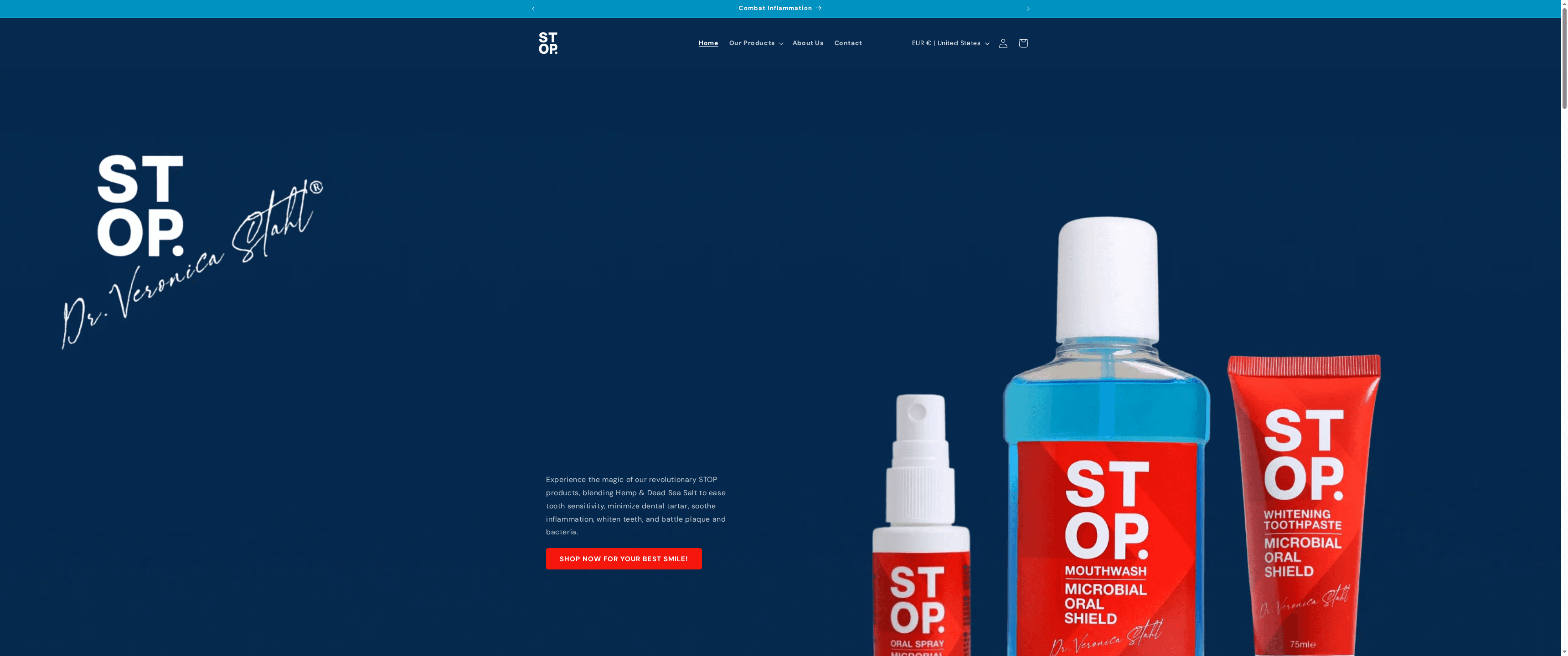
Choosing a natural oral care routine should not mean choosing between efficacy and safety. Stop Oral Care has developed its product line under the direction of Dr. Veronica Stahl, integrating dental expertise with rigorously selected natural actives including hemp-derived compounds and Dead Sea minerals to deliver formulations that meet both professional standards and consumer expectations.
Explore expert-guided fluoride-free options developed with ingredient transparency, clinical rationale, and the health-conscious European consumer in mind. Whether you are beginning your transition to natural oral care or seeking to refine an existing fluoride-free routine, Stop Oral Care provides the scientific framework and product quality necessary to support safe, long-term oral health. Professional guidance and natural innovation are not mutually exclusive. At Stop Oral Care, they are inseparable.
Frequently asked questions
Is fluoride-free toothpaste safe for everyone?
Fluoride-free toothpastes are generally safe but may not provide equivalent cavity protection for all individuals. As dentists note, the most appropriate choice depends on individual caries risk, and fluoride retains stronger cavity prevention evidence for higher-risk patients.
How do I know if I need fluoride in my oral care routine?
A dental professional can assess your caries risk based on oral history, diet, saliva function, and clinical examination. A 2025 systematic review confirms that professional guidance is foundational to safe and effective individualized oral care routines.
Are natural ingredients like botanicals effective in oral care?
Some botanicals demonstrate antimicrobial and anti-inflammatory properties that support oral health, but their effectiveness depends entirely on formulation quality and the concentration of active compounds. Not all plant-derived ingredients are proven substitutes for fluoride, and clinical evidence varies considerably by compound and delivery system.
Can I switch to fluoride-free products on my own?
Transitioning without professional input introduces clinical risk, particularly for individuals with undetected caries susceptibility or periodontal conditions. Expert consensus in dentistry identifies coordinated care and compliance monitoring as critical to successful outcomes when adopting natural or fluoride-free oral care protocols.
Recommended
- Top oral health tips in the UK: Expert guide to natural care – Stop Oral Care
- 7-Step Oral Hygiene Checklist for Adults Seeking Natural Care – Stop Oral Care
- Top natural oral ingredients for healthier teeth and gums – Stop Oral Care
- Natural oral health benefits: fluoride-free care guide – Stop Oral Care