

TL;DR:
- Clean label oral care emphasizes transparency, fewer synthetics, and traceable ingredients but isn’t always evidence-based.
- Ingredients like nano-hydroxyapatite and xylitol show clinical benefits, approaching fluoride’s efficacy in remineralization.
- Consumers should evaluate ingredient lists and seek third-party testing to ensure genuine safety and effectiveness.
Many health-conscious consumers assume that “fluoride-free” or “all-natural” automatically signals a safer, more effective oral care product. This assumption, while understandable, is not always supported by clinical evidence. The clean label movement has migrated from food packaging into personal care, bringing meaningful transparency to some products and marketing noise to others. This article examines what clean label oral care actually means, which ingredients carry scientific backing, how these products compare to conventional formulas, and how to identify genuinely evidence-based options in a crowded market.
Table of Contents
- What does ‘clean label’ mean in oral care?
- Key ingredients: What makes clean label formulas safe and effective?
- How do clean label and conventional oral care products compare?
- Science-backed clean label: What should health-conscious users look for?
- How clean label oral care supports holistic oral and overall health
- A fresh perspective: What most brands gloss over about clean label oral care
- Discover science-backed clean label oral care solutions
- Frequently asked questions
Key Takeaways
| Point | Details |
|---|---|
| Clean label definition | Clean label oral care prioritizes transparency, safety, and simple, evidence-backed ingredients. |
| Effective alternatives | Nano-hydroxyapatite and xylitol offer proven remineralization and antimicrobial benefits as fluoride substitutes. |
| Choose wisely | Not all clean label products are equally effective—always check for clinical evidence and essential active ingredients. |
| Impact beyond teeth | Microbiome-friendly clean products can support both oral and overall health. |
| Science matters | Evidence, not just marketing claims, is crucial for safe, high-performing oral care solutions. |
What does ‘clean label’ mean in oral care?
The term ‘clean label’ originated in the food industry, where it described products with shorter ingredient lists, no artificial additives, and traceable sourcing. That framework has since shifted into personal care and oral health, though without standardized regulatory definitions. In the oral care context, clean label products typically exclude artificial colors, synthetic fragrances, parabens, sodium lauryl sulfate (SLS), and other synthetic preservatives.
Transparency is a defining principle. Clean label products emphasize fewer synthetic additives and ingredients sourced for safety and efficacy, placing the burden of proof on the manufacturer rather than the consumer. This differs meaningfully from simply labeling a product ‘natural,’ which carries no regulatory threshold in the United States.
Several criteria tend to characterize clean label oral care formulations:
- No artificial colorants or synthetic flavoring agents
- Reduced or absent synthetic preservatives (e.g., parabens, formaldehyde releasers)
- Ingredient lists written in plain language where possible
- Preference for plant-derived or mineral-based actives
- Traceable ingredient sourcing and third-party testing documentation
Consumer misconceptions persist, however. Many individuals equate ‘clean’ with ‘safe’ and ‘effective’ without distinguishing the two. A formula free of harsh chemicals is not automatically one that protects enamel or reduces cariogenic (cavity-causing) bacteria. Understanding natural care myths is essential before evaluating any product’s clinical merit.
“The absence of a synthetic ingredient does not confirm the presence of a therapeutic one. Clean label status is a starting point for evaluation, not a conclusion.”
This distinction is foundational for any science-informed purchasing decision.
Key ingredients: What makes clean label formulas safe and effective?
With a working definition established, the focus turns to the specific ingredients that determine whether a clean label oral care product delivers genuine clinical benefit or simply avoids harm.
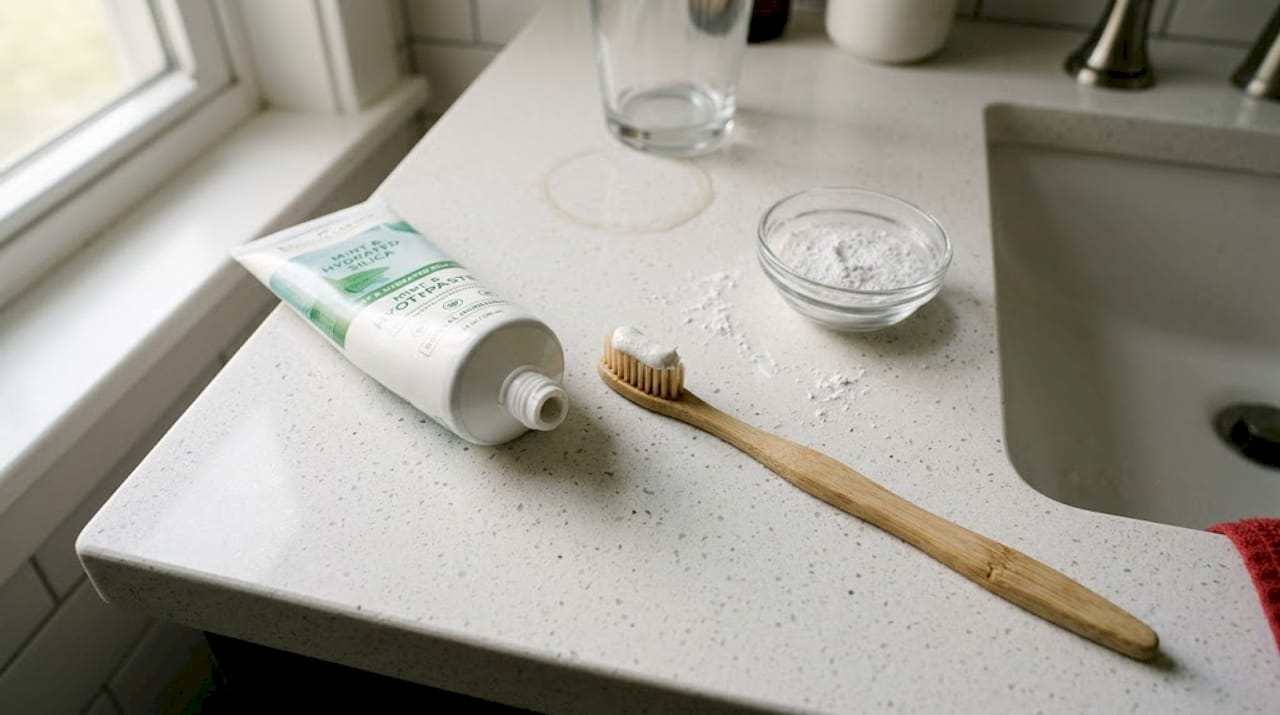
Mechanical cleaning agents remain the foundation. Gentle abrasives such as hydrated silica and baking soda (sodium bicarbonate) remove biofilm and surface stains without abrading enamel. Their relative dentin abrasivity (RDA) values are well within safe ranges established by the ISO 11609 standard.
Natural surfactants replace SLS in many clean formulas. Sodium cocoyl glutamate, derived from coconut oil and glutamic acid, produces effective foam with lower irritation potential, which is particularly relevant for users with recurrent aphthous ulcers (canker sores).
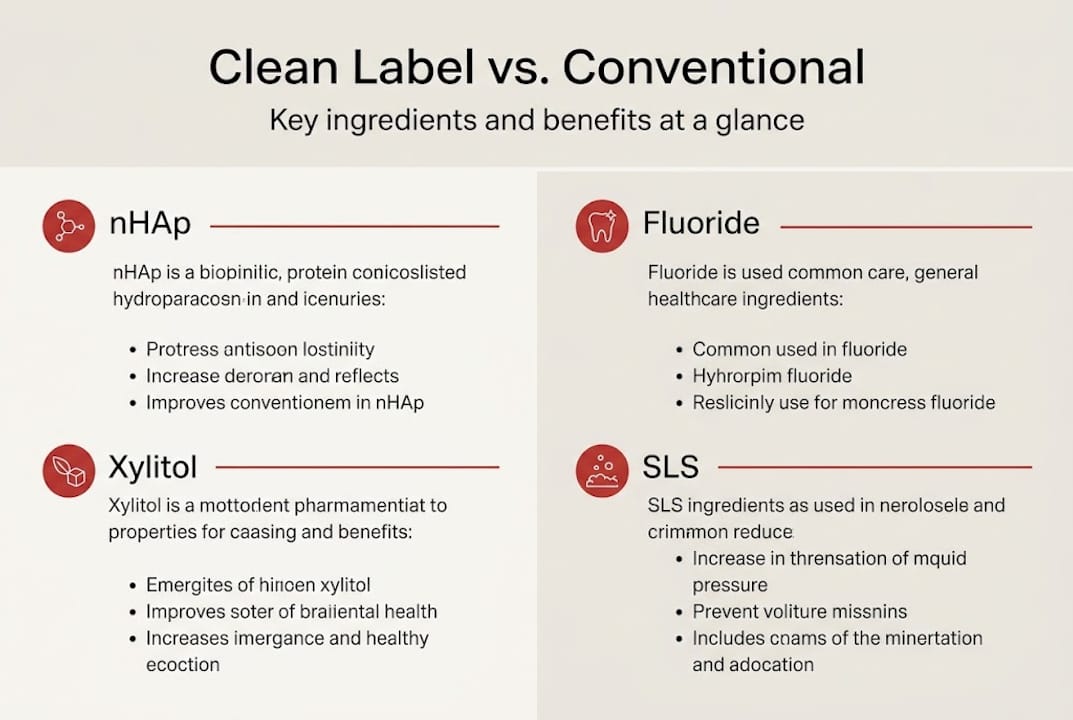
Remineralization agents are among the most clinically significant ingredients. Nano-hydroxyapatite (nHAp) and xylitol support enamel remineralization and antimicrobial activity respectively, with emerging evidence approaching fluoride’s efficacy in certain populations. Explore additional botanical ingredient benefits for a broader view of plant-derived actives.
| Ingredient | Function | Evidence level |
|---|---|---|
| Nano-hydroxyapatite | Enamel remineralization | Strong (multiple RCTs) |
| Xylitol | Anticaries, antimicrobial | Moderate to strong |
| Sodium cocoyl glutamate | Surfactant, reduced irritation | Moderate |
| Essential oils (thymol, eucalyptol) | Antimicrobial, anti-inflammatory | Moderate |
| Hydrated silica | Gentle abrasive cleaning | Well established |
Pro Tip: When reviewing a clean label toothpaste, prioritize formulas that list nHAp or xylitol as active ingredients rather than secondary additives. Their position in the ingredient list reflects their concentration and likely clinical contribution.
Antimicrobial agents in clean formulas typically include essential oils such as thymol, eucalyptol, and menthol. These compounds reduce plaque-forming bacteria in the oral biofilm and have demonstrated anti-inflammatory properties in periodontal tissue. For a comprehensive view of how these support natural enamel protection, peer-reviewed comparisons are increasingly available.
Microbiome support is an emerging consideration. Ingredients that selectively inhibit pathogenic bacteria without disrupting commensal (beneficial) species represent a more targeted approach than broad-spectrum antimicrobials.
How do clean label and conventional oral care products compare?
Understanding ingredient science sets the stage for a direct comparison between clean label and conventional oral care formulations.
Conventional toothpastes frequently contain fluoride as their primary active ingredient, which both the ADA (American Dental Association) and FDA continue to cite as the gold standard for caries prevention. Conventional formulas may also include SLS, parabens, triclosan (now largely discontinued), and artificial sweeteners such as saccharin.
Clean label alternatives have closed the efficacy gap in several areas. Comparable plaque reduction and better tolerability have been documented for certain natural agents versus chlorhexidine, a widely used conventional antimicrobial. This data point is significant for users who experience irritation or taste disruption from conventional formulas.
A structured comparison clarifies the key differences:
| Parameter | Conventional formula | Clean label formula |
|---|---|---|
| Primary active | Fluoride (1000-1450 ppm) | nHAp, xylitol, plant extracts |
| Surfactant | SLS (potential irritant) | Sodium cocoyl glutamate |
| Preservatives | Parabens, sodium benzoate | Tocopherol, natural alternatives |
| Antimicrobial | Triclosan, chlorhexidine | Essential oils, plant extracts |
| Clinical data | Extensive, decades-long | Growing, shorter track record |
The following points summarize the comparative performance evidence:
- nHAp toothpastes demonstrate statistically significant enamel remineralization, approaching fluoride’s benefit in several recent randomized controlled trials.
- Essential oil-based mouthrinses show comparable plaque index reductions to chlorhexidine without the staining or dysgeusia (taste alteration) side effects.
- SLS-free formulas are associated with lower rates of mucosal irritation in sensitive individuals.
- Some clean label products omit both fluoride and nHAp, leaving a remineralization gap that no plant extract fully compensates.
For a detailed review of formulation differences, compare natural vs. conventional product categories and their underlying science-backed safety standards.
Science-backed clean label: What should health-conscious users look for?
Identifying genuinely effective clean label oral care products requires systematic label evaluation rather than reliance on marketing claims.
Reading the label critically is the first step. Ingredient lists are ordered by concentration, so active therapeutic agents should appear near the top. A product listing essential oil extracts last, after multiple inactive carriers, signals a largely cosmetic rather than therapeutic formula.
A practical checklist for ingredient review:
- Confirm the presence of a proven remineralizer: nHAp (listed as hydroxyapatite) or xylitol at clinically relevant concentrations
- Identify the antimicrobial active: look for essential oils, plant-derived polyphenols, or zinc compounds
- Verify the abrasive agent’s RDA value or select brands that publish this data
- Check for third-party testing certifications or published clinical studies referenced by the manufacturer
- Avoid formulas where ‘natural’ is the only differentiating claim without supporting ingredient evidence
Pro Tip: Search the manufacturer’s website for published peer-reviewed studies or clinical trial registrations. Brands committed to evidence will reference accessible research. Those that do not may be relying on ingredient lists alone.
Clean label products with innovations such as nHAp deliver meaningful benefit only when backed by robust clinical evidence. Certifications from recognized bodies such as the NSF or equivalent third-party organizations add a layer of verification beyond marketing language.
For those switching to fluoride-free formulas, a structured fluoride-free workflow supports the transition without compromising enamel health. Evaluating sustainable alternatives also informs longer-term product choices beyond single formulation comparisons.
How clean label oral care supports holistic oral and overall health
Beyond enamel protection and plaque management, clean label oral care intersects with the broader oral microbiome and systemic health considerations.
The oral cavity hosts over 700 identified bacterial species, forming a complex, interdependent ecosystem. Conventional broad-spectrum antimicrobials, while effective against pathogens, may also reduce populations of commensal species that regulate pH, inhibit pathogen colonization, and modulate local inflammation. Microbiome-friendly formulas that target pathogenic bacteria selectively may preserve this balance more effectively.
Clean label ingredients associated with microbiome support include:
- Xylitol: selectively inhibits Streptococcus mutans without suppressing commensal streptococci
- Essential oils at subtherapeutic concentrations: reduce virulence factors in periodontopathogens (gum disease-causing bacteria) without full flora disruption
- Plant-derived polyphenols: exhibit targeted antimicrobial and anti-inflammatory effects in periodontal tissue
- Dead Sea minerals: under investigation for their role in modulating inflammatory pathways in gingival tissue
Clean label formulas with microbiome-friendly ingredients may promote a balanced oral flora, with downstream contributions to breath quality, gum tissue integrity, and systemic inflammatory markers.
“The oral microbiome is increasingly recognized as a gateway to systemic health. Disrupting it indiscriminately may carry consequences beyond the oral cavity, including associations with cardiovascular disease and metabolic dysregulation.”
Emerging epidemiological data links chronic oral dysbiosis (microbial imbalance) to elevated systemic inflammation, cardiovascular risk, and immune function alterations. Selecting oral care products that preserve rather than disrupt microbial balance is therefore not a purely cosmetic decision.
A fresh perspective: What most brands gloss over about clean label oral care
The clean label movement has created a market in which consumer intent and product reality frequently diverge. Many brands adopt clean label positioning as a marketing strategy while omitting the active ingredients that make a formula clinically meaningful. A product may be free of every ingredient on a consumer ‘avoid’ list and still provide no measurable benefit beyond mechanical cleaning.
The more consequential oversight involves safety in oral health claims that conflate ingredient absence with therapeutic effect. Fluoride-free does not guarantee improved safety for every user; nHAp-free, xylitol-free formulas may leave enamel vulnerable without offering a documented alternative.
Real innovation in this space does not choose between natural origin and clinical efficacy. It demands both. Products backed by peer-reviewed trials, transparent ingredient disclosures, and third-party testing represent the intersection that the market has not yet standardized. Smart consumers are well-served by demanding accessible research rather than accepting positioning language as a substitute for evidence.
Discover science-backed clean label oral care solutions
The evidence reviewed here points toward one clear principle: clean label oral care is most valuable when formulated at the intersection of ingredient transparency and clinical validation.
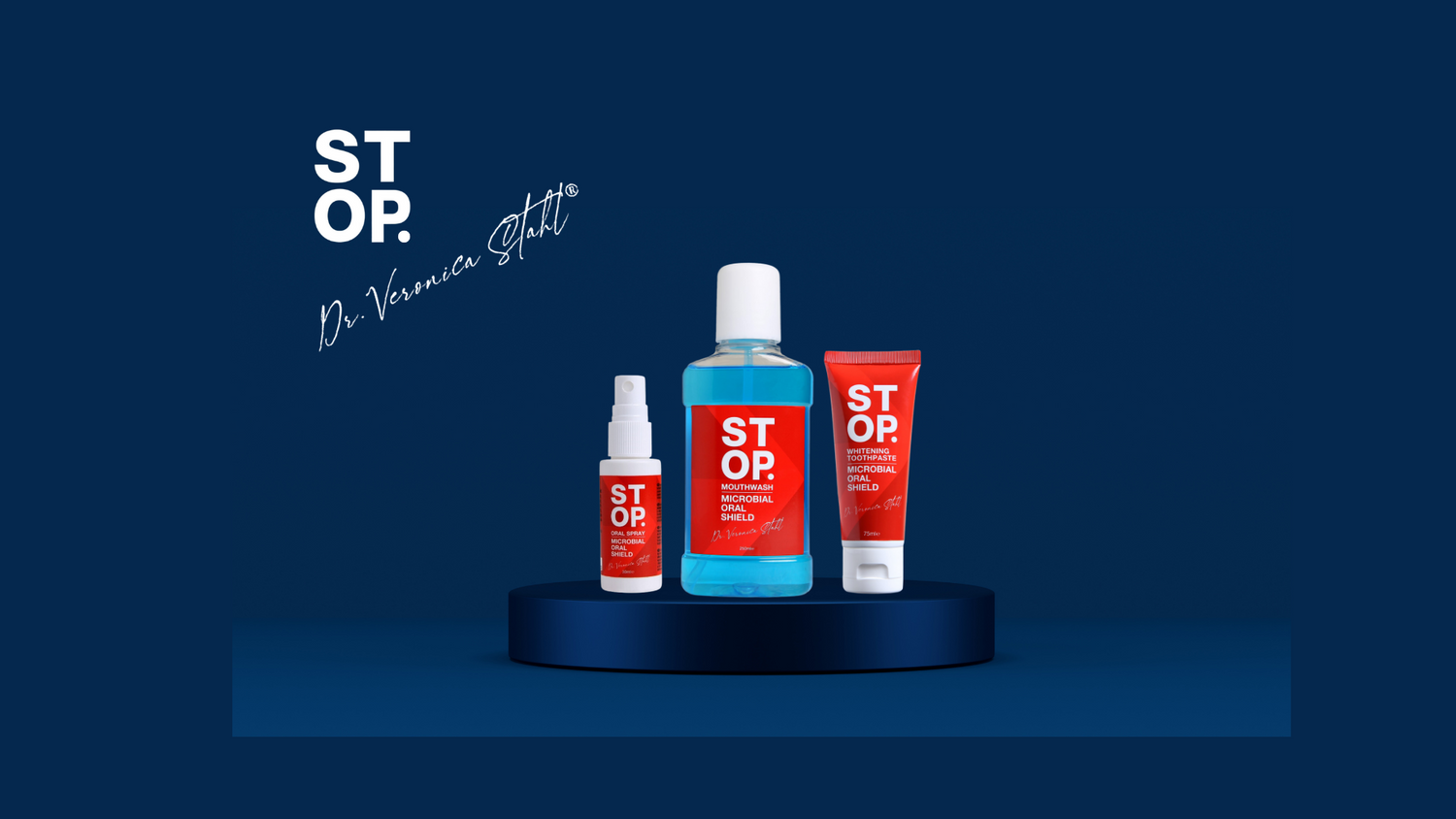
Stop Oral Care offers a curated line of fluoride-free oral health products formulated with hemp and Dead Sea minerals, developed under the scientific direction of Dr. Veronica Stahl. Each product reflects both clean label values and a commitment to peer-reviewed ingredient selection. For those ready to apply the principles discussed here, explore clean label options and review the clinical rationale behind each formulation directly on the product pages.
Frequently asked questions
Is clean label oral care really safer than conventional toothpaste?
Most clean label brands eliminate synthetic chemicals and harsh ingredients, but safety depends on the clinical evidence behind each formula. Some products skipping essentials may reduce efficacy, which itself constitutes a safety concern for enamel-vulnerable individuals.
Does nano-hydroxyapatite work as well as fluoride?
Clinical studies show nHAp approaches fluoride’s remineralization benefits and is well-tolerated, but long-term population data is still emerging. nHAp repairs enamel micro-damage because it comprises approximately 97% of enamel’s mineral composition.
What should I avoid in clean label oral care products?
Be wary of formulas lacking proven remineralizing or antimicrobial ingredients. Products that use ‘natural’ as a substitute for research-backed efficacy may reduce clinical benefit without delivering a meaningful safety advantage.
Can clean label oral care benefit the oral microbiome?
Some clean label products with microbiome-supporting ingredients may enhance oral flora balance. Microbiome-friendly formulas that preserve commensal species while targeting pathogens offer a more targeted approach than broad-spectrum conventional antimicrobials.